Location: Presented via Zoom: 828.685.7838; Shown in EER 3.646
Sponsor: Department of Energy (DOE) Energy Frontier Research Center (EFRC) Materials for Water and Energy Systems (M-WET)
Title: A critical look at ion properties relevant to emerging separations
Abstract
Ion separations (and separation materials such as membranes) are a crucial enabling technology for the energy transition. First, ion conducting membranes are ubiquitous components of electrochemical devices ranging from redox flow batteries and fuel cells to processes for decarbonized chemical manufacturing. Second, many of the minerals deemed “critical” by the Dept. of Energy and essential to renewable energy technologies, including Li, Ni, Mn, and Co, occur as dissolved ions that can potentially be recovered from natural and man-made brines. The multitude of emerging applications in these two areas has led to an explosion in the number of specific separation challenges (e.g., combination of target ion, source water, competing background ions, desired selectivity, etc.) that are potentially of interest. Notably, many emerging separations require a degree of “specific ion selectivity”—the ability to differentiate ions with the same charge such as Li+ and Na+—that far exceeds the capabilities of state-of-the-art materials such as reverse osmosis and ion exchange membranes.
In this presentation, I will present a critical analysis of the properties of ion species most relevant to emerging applications in electrochemistry, critical mineral and resource recovery, revealing fundamental asymmetries between cations and anions, and discuss their implications for separation design. I will highlight the importance of understanding the electronic structure (i.e., the shape and character of electron clouds) of ionic species and describe insights from first-principles molecular simulations that support the existence of ion pairs, rather than free ions, inside hydrated membranes.
Bio
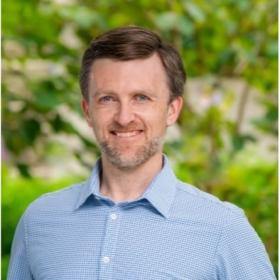
Dr. Ryan Kingsbury is an Assistant Professor of Civil and Environmental Engineering and the Andlinger Center for Energy and the Environment at Princeton University. His research group seeks to accelerate development of ion separation technologies that address environmental challenges, including systems for water desalination, industrial waste recycling, and critical mineral extraction. In particular, the lab seeks to understand the ion-selective materials (such as membranes, separators, electrodes, or sorbents) that are present in virtually any electrochemical device. Major areas of focus include 1) connecting observable material performance to molecular-scale thermodynamic and kinetic phenomena 2) developing accelerated materials screening methods for environmental engineering problems, and 3) exploring novel process configurations and driving forces. Prior to joining Princeton, he completed a PhD in Environmental Sciences and Engineering from the University of North Carolina at Chapel Hill and was a postdoctoral researcher at Lawrence Berkeley National Laboratory.